East Asian in 1500
Key terms
- Ming 明 (1368–1644): compared to Europe
- Zhu Yuanzhang 朱元璋 aka Hongwu 洪武 Hung-wu (1328–1398)
- Empress Ma 馬皇后 (1332 – 1382)
- Yongle [Yung-lo] 永樂 (b. 1360, r. 1402-1424) -- rebellion, usurper(?), son of Hongwu by "lesser" wife
- Chosŏn (Joseon) 朝鮮 dynasty (1392–1897)
- Ashikaga shogunate 足利将軍 (1336–1573)
- Warring States (Japanese) period (1467 to 1582/1590/1600/1603)
- Wakō 倭寇 piracy
- Tributary relations
- Single Chinese emperor 天皇・天子 invested with "mandate of heaven" 天命
- Invests subordinate foreign kings 国王
- Trade relations are reward for recognition of emperor
- Recurring practice/structure in East Asian politics - well documented from at least Han dynasty
Ming Dynasty
Foundations
- Red Turban revolt
- Millenarian and anti-Mongol
- Associated with Maitreya/MilePusa/Miroku 弥勒菩薩
- Zhu Yuanzhang 朱元璋 aka Hongwu 洪武 (1328–1398)
- Takes Nanjing 南京 1356
- Declares new dynasty 明 Ming 1368
- Takes Khanbaliq 大都 aka Beijing 北京 1368
- Yunnan conquered in 1382
- Zhu Yuanzhang policies
- Consolidation through marriage politics
- Primary wife is Empress Ma, daughter of Red Turban leader
- Consorts are Korean, Mongols, etc.
- Maritime Prohibition (Haijin 海禁) 1371
- Response to Piracy
- Initially, some destruction of port facilities
- But ban is leaky, erratically enforced, and counter-productive
- Violent purges: 100,000+ executed
- Yongle [Yung-lo] 永樂 (b. 1360, r. 1402-1424) -- "second foundation"
- Intellectual orthodoxy
- Commissions official editions and encyclopedias
- 1415 - Great Compendium of the Five Classics and the Four Books
- 1417 - Great Compendium of the Philosophy of Human Nature
- Distributed across country and internationally
- Cement Zhu Xi - Song orthodoxy
- Implicitly, emperor is as a sage ruler, a teacher of his people, and a patron of learning
- Expansion of empire
- Conquest of Annam (Vietnam) -- client state from early 1400s
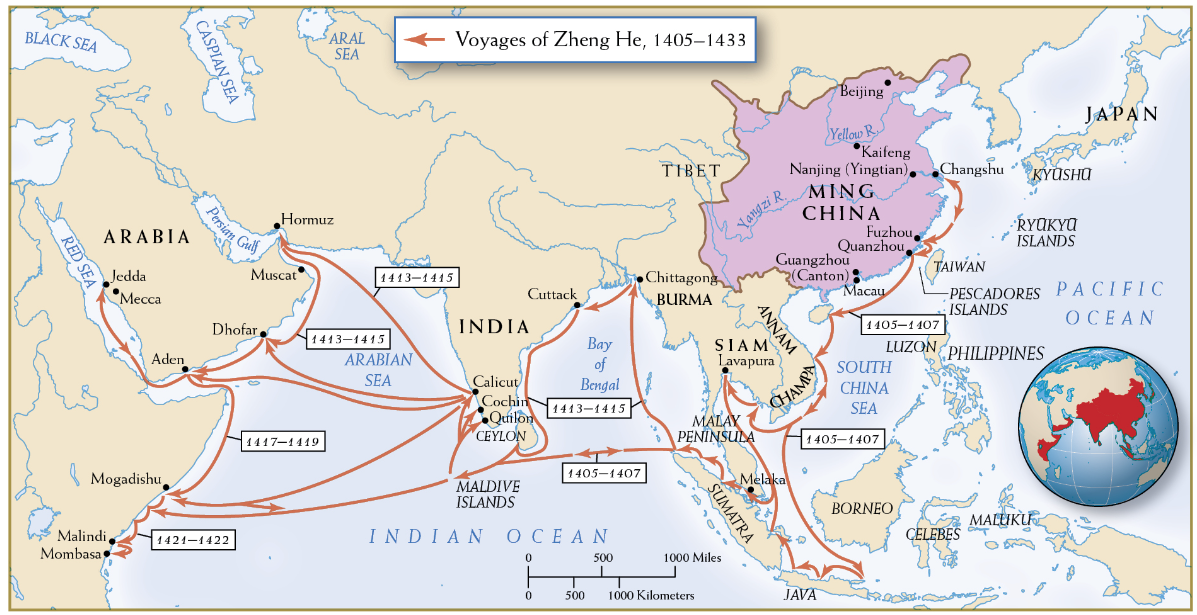
- Naval Voyages - Seven Expeditions, 1405-1433
- Zheng He (鄭和) 1371-1435
- Born Ma Sanbao to Chinese Muslim family - Ma means Mohammed
- Father was hajji
- Zheng diverted last voyages for haji
- Born Kunming 昆明 in Yunnan -- how far from Beijing?
- Eunuch - castrated after capture in youth
- Massive fleets with 20+ ships and 20,000+ men
- Purposes
- Glory of Yongle: ambition and legitimacy
- Supplant smuggling with official missions -- ongoing Chinese demand for imports, e.g. silver, spices and exports e.g. silk, ceramics AND first expedition captures major pirate
- Expand imperial authority
- At least 30 countries send emmissaries and tribute
- First expedition returns (1407) with ambassadors from Calicut, Semudera, Quilon, and Malacca
- Third voyage captures king of Ceylon (1411), takes him back to Nanjing as prisoner, later released
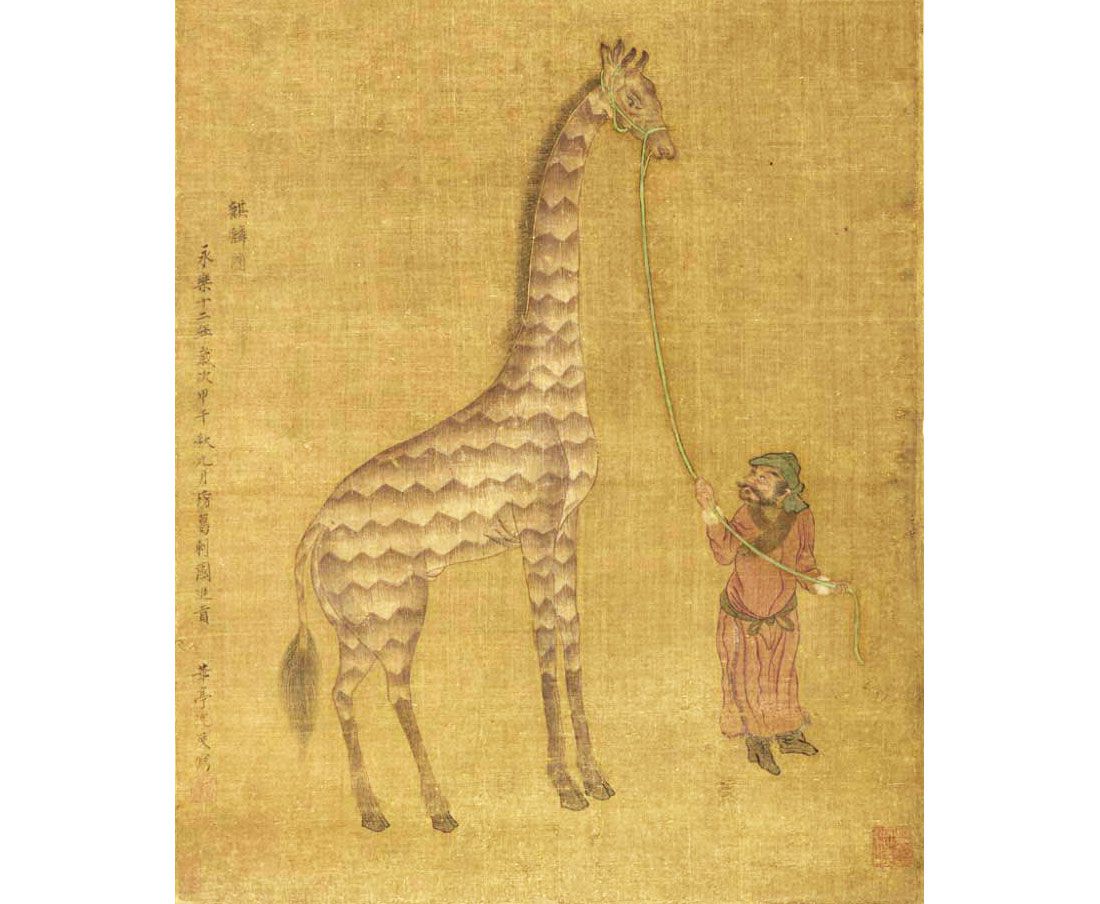
- Fourth expedition returns with emissaries from 18 states including Mogadishu and Malindi ... and giraffe
- Fifth expedition reaches East African coast, returns home African envoys, comes back with lions, leopards, dromedary camels, ostriches, zebras, rhinoceroses, and antelopes
- Sixth voyage returns ambassadors and Hormuz, Dhufar, Aden, Mogadishu and Brava
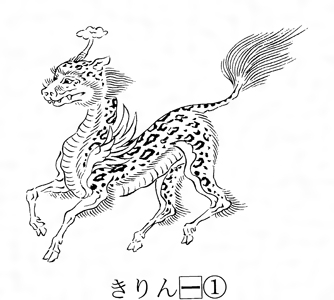
- Qilin/kirin 麒麟: body of a deer, hooves of a horse, tail of an ox, head of a wolf, and horns
Key Institutions/Practices
Capital construction
- Two capitals Beijing 北京 and Nanjing 南京
Examination system
- Three tiers: Provincial, urban, Beijing
- Focus on classical learning
- Pass rates are 2% to 9%
- Helps limit size of administration -- total perhaps 15,000 salaried officials
- Is that GOOD or BAD?
Tributary system
- Chosŏn (Joseon) 朝鮮 dynasty becomes model tributary state
- Korean kings understand Ming investitute as legitimizing rather than denigrating
- Chosŏn throne is loyal to Ming even after its fall
- Japan
- Ming dynasty searches for a Japanese "king" -- someone to take responsibility to supressing piracy
- BUT there is no strong central authority in Japan
- both shoguns and emperors are weak and internally divided
- Ashikaga Yoshimitsu accepts investiture in order to get trading privileges
- So does weaker branch on imperial line -- "northern court"
- Japan identity as independent and unique, e.g. Mongols
Ming China in the World Economy
- Ming China is huge
- Approx 80 million in 1400 — 23% of world
- Approx 100 million in 1500 — 26% of world
- Approx 150 million in 1550 — 30% of world
- Approx 200 million in 1600 — 33% of world
- China is technological advanced — world leader in production of:
- China is prosperous — millions of consumers for
- clothing as fashion
- luxurious furnishings
- popular literature: Monkey's Journey to the West -- in 20th C animation from 32:30 and 37:00,The Plum in the Golden Vase
- Ming dynasty needs cash for this growing economy -- more people with more disposable income
- BUT - early Ming attempts at paper money fail and lead to rampant inflation
- Ming monetizes its economy with silver -- Ming is a silver guzzler from both Japan and New World
- New World silver into Spain in:
- 1570s is about 100,000 kg per year
- 1610s is about 200,000 kg per year
- 1650s is about 40,000 kg per year
- Silver imports into Ming China:
- 1630s is about 57,000 kg per year from Manila (80% is smuggling)
- late 1500s is about 6,000 to 30,000 kg per year from Macao
- late 1500s is about 30,000 kg per year from Japan — about 30% carried by Dutch East Indian company
- Huge volume of Chinese ceramics in Lisbon, Chinese silks in Nagasaki
- Prices of gold and silver begin to move together for first time in history
- Bad map of this global intergration
- Good map of this global intergration
- Reduced access to New World silver in 1600s is one contributing factor in Ming decline — WHY?