Qing - Tokugawa
Key terms
- Qing China (1644-1911)
- Tokugawa Japan (1600/1603-1867)
- Chosŏn (Joseon) Korea (1392–1897)
- sankin kōtai
- Qianlong Emperor 乾隆帝;(r. 1735–1796)
- Canton system
Tokugawa Japan: Core Institutions/Practices
- sankin kōtai or "alternate attendance system"
- Similar to Versailles?
- National indirect power but not centralized control - Tokugawa revenue is from Tokugawa lands
- Transformation of Edo from fishing village into city of 1M people
- Triggers regional urbanization - Ōsaka
- Transformation of samurai into urban "salaried" class
- Creation of new, urban consumer culture: kabuki, sushi, ukiyoe
- Ukiyoe: Hiroshige (1797-1858) and Hokusai (1760-1848)
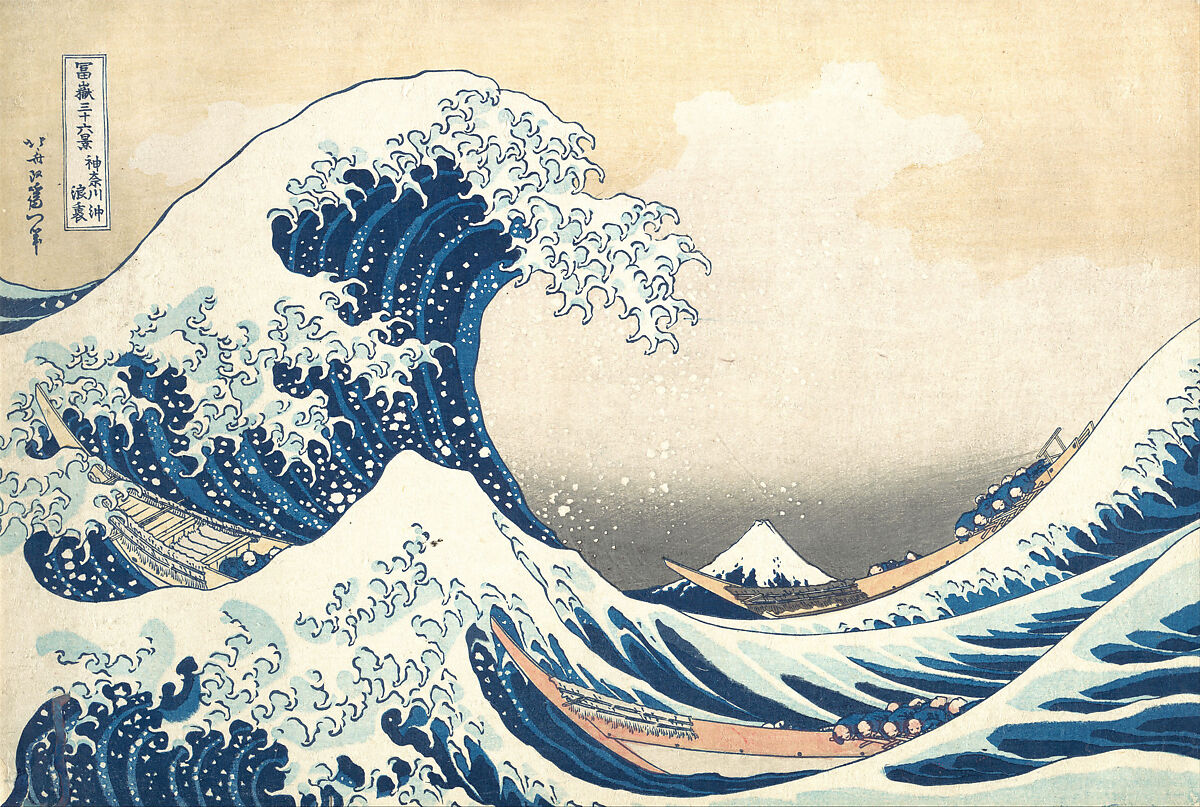 Hiroshige's "Great Wave off Kanagawa, 1831"
- End of maritime migration
- So-called "closed country" edicts
- Expulsion of Spanish (1624) and Portuguese (1639)
- Ban on overseas travel (1635)
- Japan as ethnically more isolated rather than integrated
- After Qing topples Ming and conquers Chosŏn — Japan is uniquely unconquered, better than China?
- If so, what about Buddhism and Confucianism?
- Contrast with pre-1650 Japan as multicultural -- pop-culture edition
- Yasuke (c. 1550 - 1582(?) - African (Mozambique?) manservant/body guard of Oda Nobunaga
— Netflix 2021 edition
- Will Adams aka Miura Anjin 三浦按針 (1564 – 1620) - English navigator and vassal of Tokugawa Ieyasu (1986 Emmy Award-winning miniseries)
- Yamada Nagamasa 山田長政 (1590–1630) — Japanese adventurer/merchant/privateer, head of Japanese expatriate army supporting King Songtham (2010 Thai action film)
- Zheng Chenggong 鄭成功 aka Koxinga (1624 – 1662) — half-Chinese, half-Japanese pirate/privateer/Ming loyalists, founder of Kingdom of Tungning 東寧王國 (2000 Chinese film)
- Cautious, mercantilist foreign policy
- Avoid foreign relations that might endanger regime
- Keep peaceful relations with Chosŏn and Ming/Qing through ambiguity -- "taikun 大君 diplomacy"
- Mercantilist — don't export specie, imports are suspect
Qing China: Core Institutions/Practices
- How Chinese was Qing China: "New" Qing History
- Standard view: by the early 1700s the Manchus were "Sinified" and had effectively become Han Chinese
- 5th Qing Emperor Qianlong (r. 1735–1796) is effectively Chinese
- His great accomplishment is 四庫全書 Siku Quanshu, 2.3 million page collection/encyclopedia of Chinese texts
- New Qing History view: the Manchus never lost their Manchu identity
- Qianlong loved rituals celebrating Manchu/Mongol/Inner Asian traditions
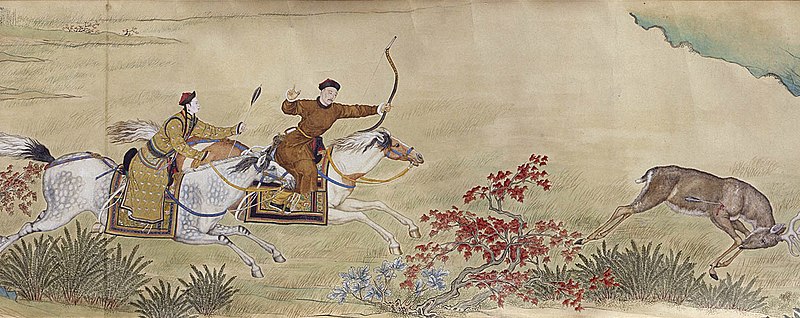 Giuseppe Castiglione (1688-1766)
- Qianlong continued Manchu practice of combining conquest with marriage alliances: his Uyghur Muslim imperial concubine 容妃
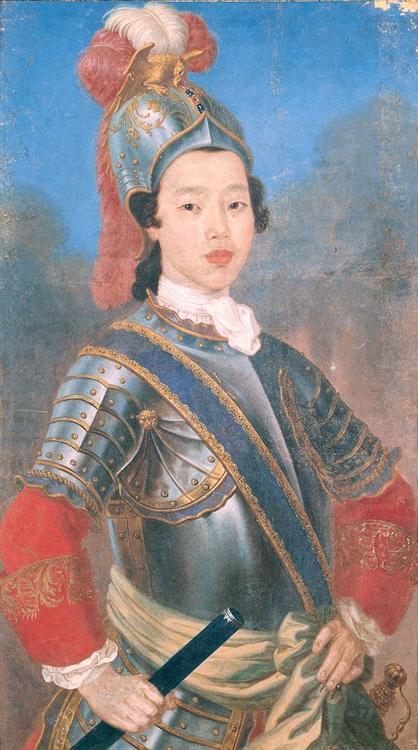 Rong Fei/Xiang Fei 香妃 by Giuseppe Castiglione (1688-1766)
- Qing China was a multi-ethnic Eurasian empire, not a Chinese dynasty
- This generates new answers to old questions
- Why didn't Qing establish greater control over periphery? What did it tolerate corruption (lost funds and revenue)?
- Old answers:
- Confucian sense that large government reflected moral failings of ruler
- Corruption: Qianlong was enthralled by Heshen, palace guard officer - promoted rapidly
- New answers:
- Sprawling multi-ethnic Eurasian empires don't centralize, cf. Mongols, Ottomans
- Russians - Treaty of Nerchinsk (1689)
- Tibetans - dGe-lugs-pa (Yellow Hat) sect has both secular and religious authority
- Uighurs - ally with amir/emirs
- VERY VERY BIG
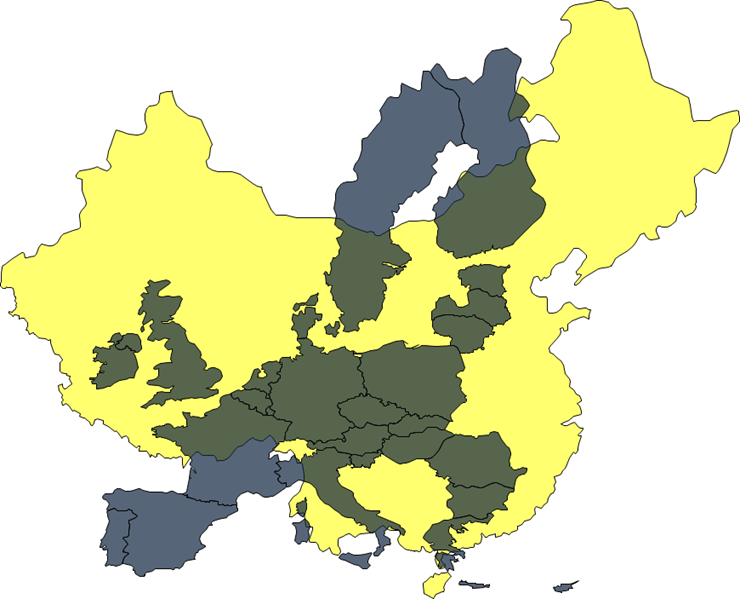
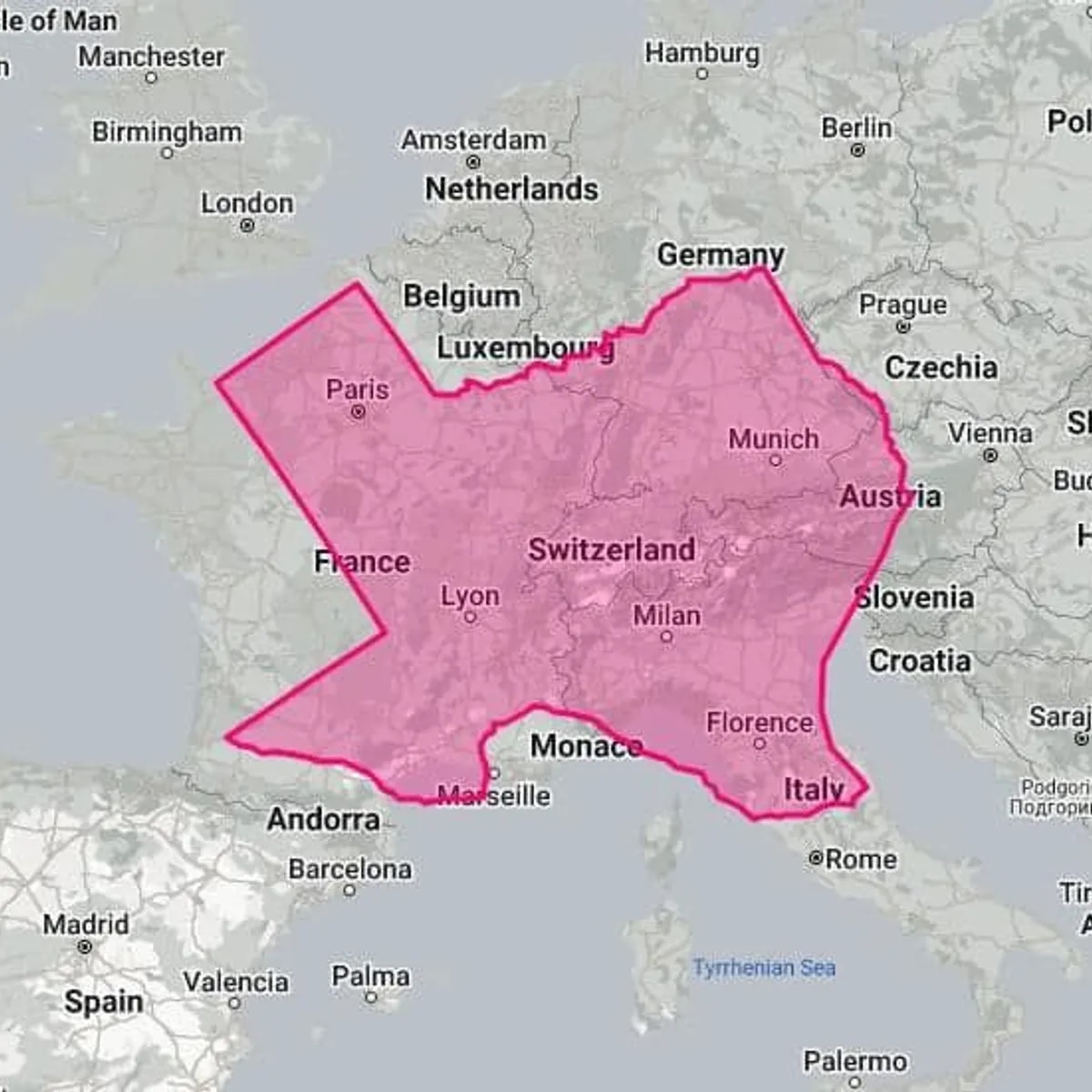
- Why didn't Qing recognize importance of maritime trade
- Old answers:
- Continuation of Ming suspicion of trade
- Concerns over piracy
- "Chinese" arrogance in Qianlong response to George McCartney (1792)
You, O King, live beyond the confines of many seas, nevertheless, impelled by your humble desire to partake of the benefits of our civilization, you have dispatched a mission respectfully bearing your memorial. Your Envoy has crossed the seas and paid his respects at my Court on the anniversary of my birthday. To show your devotion, you have also sent offerings of your country’s produce.
Yesterday your Ambassador petitioned my Ministers to memorialize me regarding your trade with China, but his proposal is not consistent with our dynastic usage and cannot be entertained. Hitherto, all European nations, including your own country's barbarian merchants, have carried on their trade with our Celestial Empire at Canton. Such has been the procedure for many years, although our Celestial Empire possesses all things in prolific abundance and lacks no product within its own borders. There was therefore no need to import the manufactures of outside barbarians in exchange for our own produce. But as the tea, silk and porcelain which the Celestial Empire produces, are absolute necessities to European nations and to yourselves, we have permitted, as a signal mark of favor, that foreign hongs [groups of merchants] should be established at Canton, so that your wants might be supplied and your country thus participate in our beneficence. But your Ambassador has now put forward new requests which completely fail to recognize the Throne's principle to "treat strangers from afar with indulgence," and to exercise a pacifying control over barbarian tribes, the world over. Moreover, our dynasty, swaying the myriad races of the globe, extends the same benevolence towards all.
Your England is not the only nation trading at Canton. If other nations, following your bad example, wrongfully importune my ear with further impossible requests, how will it be possible for me to treat them with easy indulgence? Nevertheless, I do not forget the lonely remoteness of your island, cut off from the world by intervening wastes of sea, nor do I overlook your excusable ignorance of the usages of our Celestial Empire. I have consequently commanded my Ministers to enlighten your Ambassador on the subject, and have ordered the departure of the mission. But I have doubts that, after your Envoy's return he may fail to acquaint you with my view in detail or that he may be lacking in lucidity, so that I shall now proceed ... to issue my mandate on each question separately.
Your Ambassador requests facilities for ships of your nation to call at Ningpo, Chusan, Tientsin and other places for purposes of trade. Until now trade with European nations has always been conducted at Macao, where the foreign hongs are established to store and sell foreign merchandise. Your nation has obediently complied with this regulation for years past without raising any objection. In none of the other ports named have hongs been established, so that even if your vessels were to proceed thither, they would have no means of disposing of their cargoes. Furthermore, no interpreters are available, so you would have no means of explaining your wants, and nothing but general inconvenience would result. For the future, as in the past, I decree that your request is refused and that the trade shall be limited to Macao.
- New answer:
- Boats, really, we should get on boats? We're Manchu!
Challenges to Qing Authority
- Regional rebellions — corruption triggers rebellions, suppression is costly and violent due to corruption
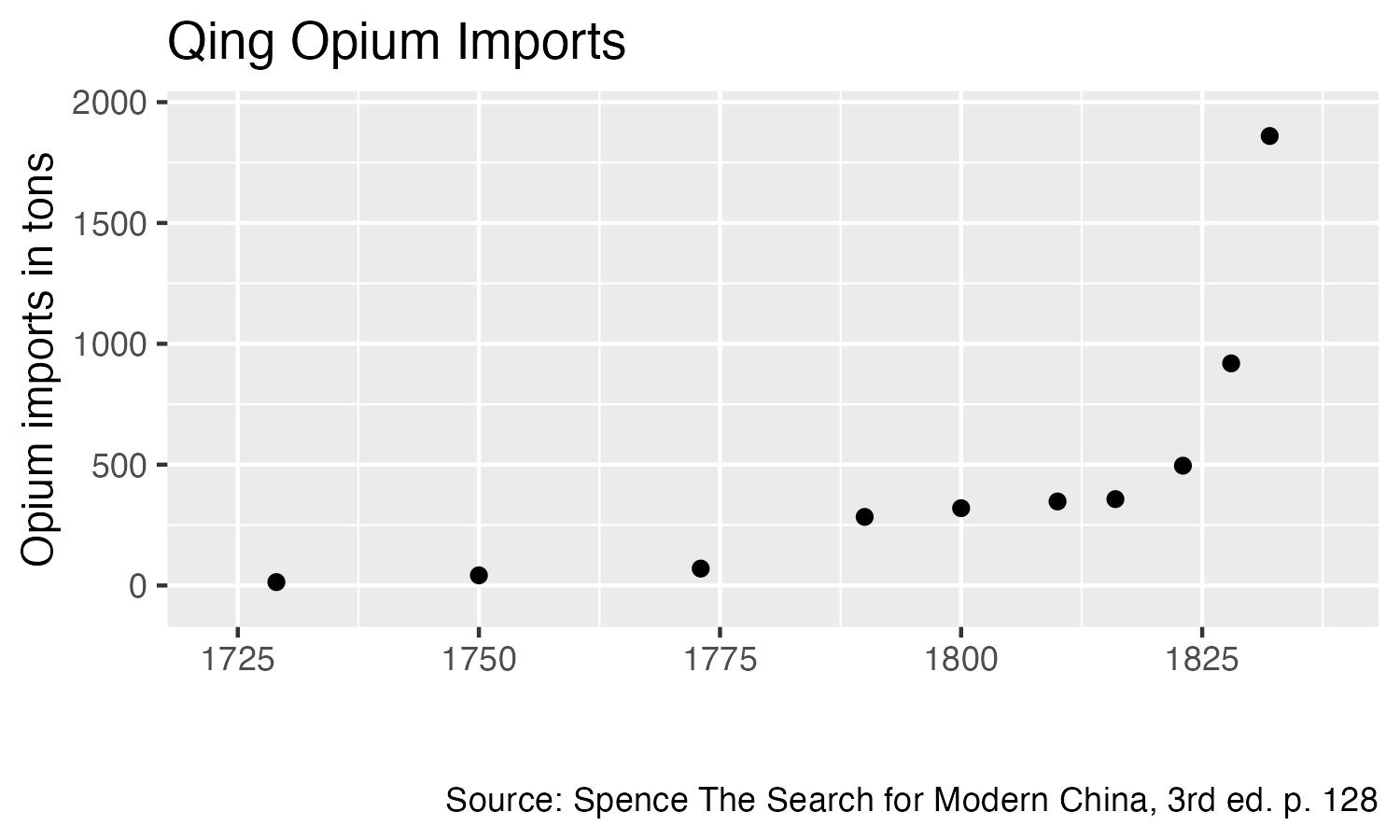
- Failure to recognize threat of opium